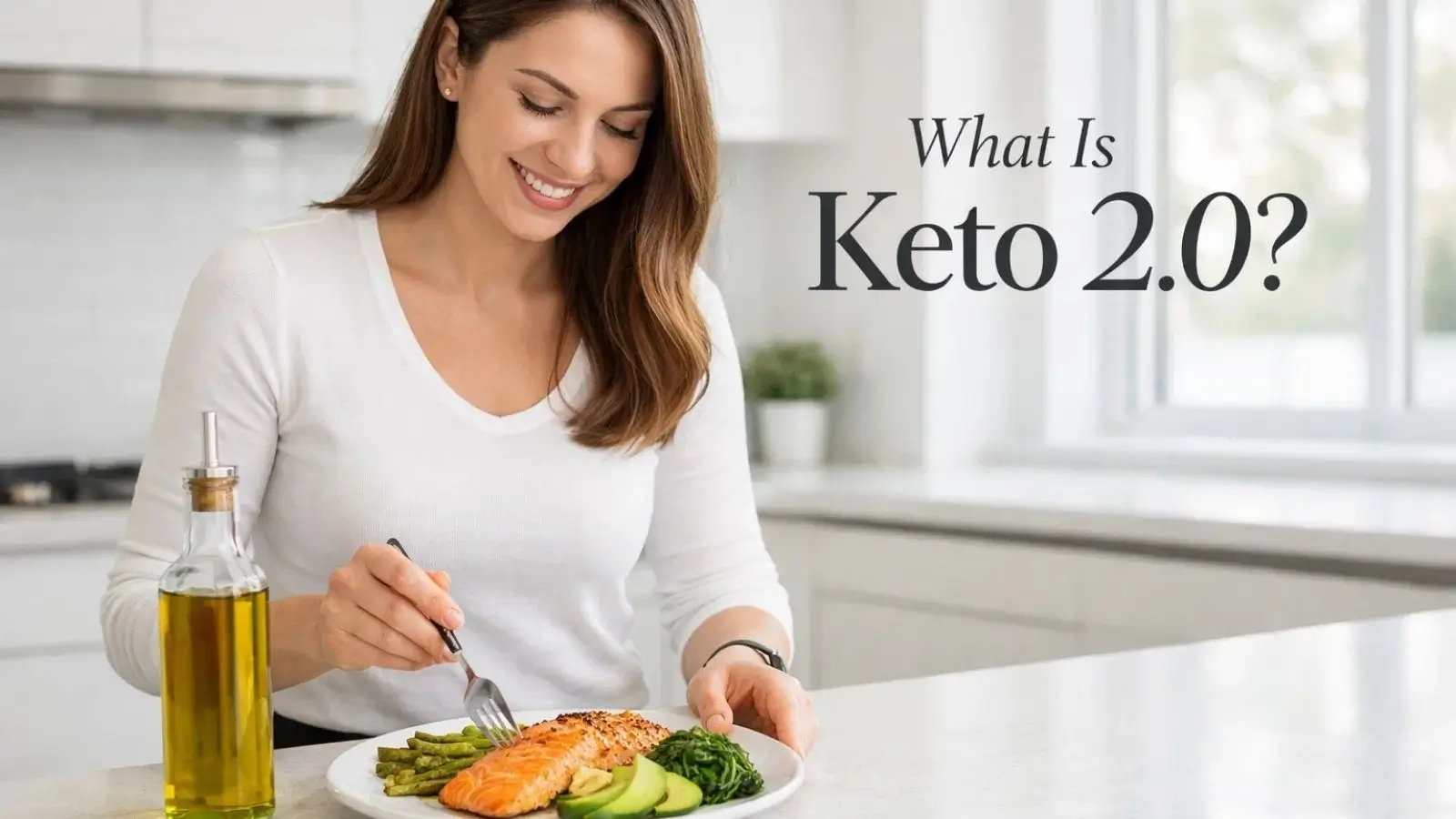
What Is Keto 2.0? A Modern Approach to Sustainable Low-Carb Eating
The ketogenic diet has evolved — and Keto 2.0 is part of that evolution.
If traditional keto felt too strict, too focused on fat, or hard to maintain long-term, this newer approach may be exactly what you’re looking for.
Keto 2.0 is designed to be simpler, cleaner, and more sustainable, especially for beginners and busy people who want real-world results without complicated tracking.
Instead of obsessing over perfect macro ratios, Keto 2.0 emphasizes high-quality protein, whole foods, low-carb vegetables, and practical meal planning — making it easier to follow balanced meals and explore delicious Keto recipes that fit into a modern lifestyle.
In this guide, you’ll learn exactly what Keto 2.0 is, how it works, how it compares to traditional keto, and how to get started the smart way.
Table of Contents
What Is Keto 2.0 Exactly?
Keto 2.0 is a modern, flexible interpretation of the ketogenic lifestyle that prioritizes protein intake, food quality, and long-term adherence while still keeping carbohydrates low enough to support metabolic health.
Rather than pushing extremely high fat percentages, Keto 2.0 focuses on:
• Lean and moderate-fat proteins
• Non-starchy vegetables
• Healthy fats used intentionally
• Minimal processed foods
• Simple, repeatable meals
The goal is not perfection — it’s progress and sustainability.
Many people struggle with classic keto because of rigid macro tracking, restrictive food lists, or difficulty eating socially. Keto 2.0 removes much of that friction by encouraging a balanced low-carb plate built around protein and nutrient-dense ingredients — making it a more sustainable option, especially for those just starting their journey and looking for clear keto for beginners guidance.
In practice, Keto 2.0 looks like:
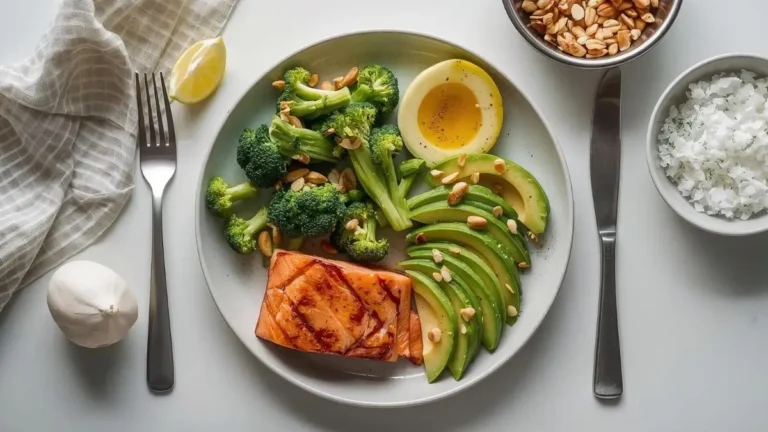
✔️ A grilled salmon salad with avocado
✔️ Chicken bowls with greens and olive oil
✔️ Egg-based lunches with vegetables
✔️ Simple dinners built around meat or fish plus sides
It’s still keto-friendly — but designed for real life, not spreadsheets.
How Is Keto 2.0 Different From Traditional Keto?
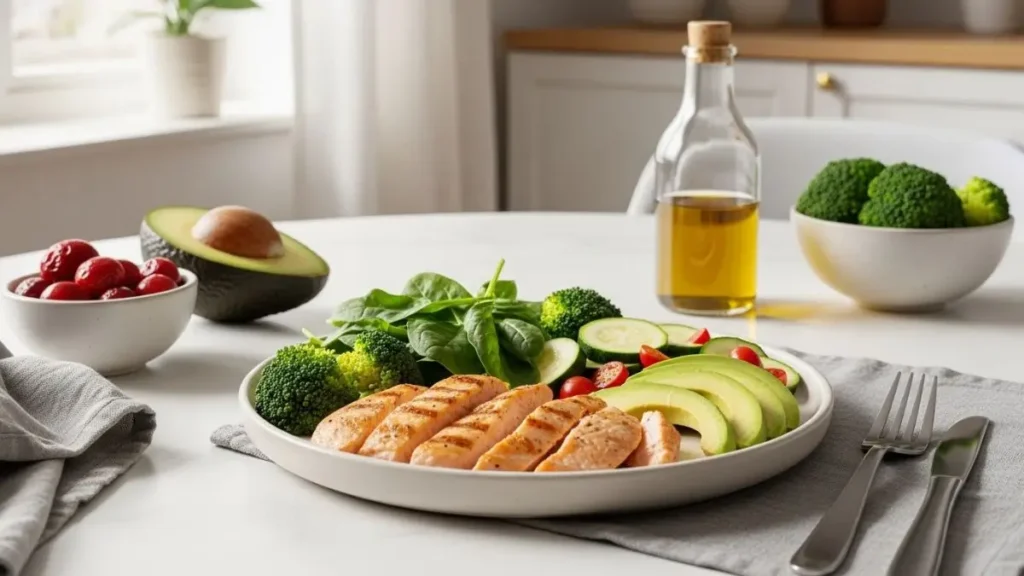
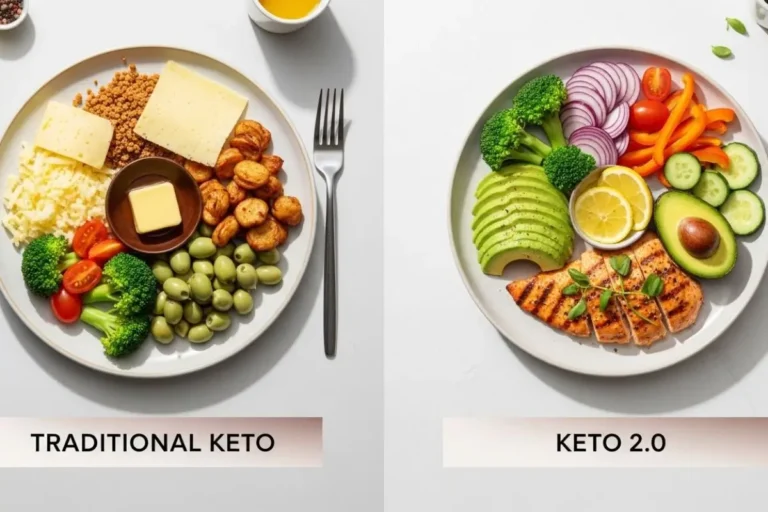
While both approaches aim to reduce carbohydrates and encourage fat-burning metabolism, Keto 2.0 shifts the focus toward practical nutrition and long-term success rather than rigid macro targets.
Traditional keto often emphasizes very high fat intake and strict tracking to stay within narrow carbohydrate limits. Keto 2.0 keeps carbs low too — but adds flexibility by highlighting protein quality, whole foods, and sustainable habits.
Here are the four core differences.
Protein Comes First
Classic keto sometimes prioritizes fat above all else, which can leave beginners feeling under-fueled or overly dependent on oils and butter.
Keto 2.0 flips that approach by making protein the foundation of each meal. Adequate protein helps:
• support muscle health
• promote fullness
• stabilize energy levels
• reduce cravings
Meals typically start with chicken, fish, eggs, turkey, tofu, or lean cuts of meat — with fats added for flavor and satiety rather than dominance.
Cleaner Food Choices
Another major difference is food quality.
Keto 2.0 encourages whole, minimally processed ingredients over packaged “keto” products filled with artificial sweeteners or seed oils.
Expect to see more:
• fresh vegetables
• wild or pasture-raised proteins when possible
• olive oil and avocado oil
• nuts and seeds in moderation
And fewer ultra-processed bars, shakes, or substitutes.
Less Obsession With Macros
Strict keto often requires weighing food, tracking grams of fat, and constantly checking ketone levels.
Keto 2.0 simplifies this by focusing on plate composition rather than perfect numbers:
✔️ protein-centered meals
✔️ plenty of low-carb vegetables
✔️ moderate healthy fats
✔️ carbs kept naturally low
This makes the lifestyle far easier to maintain — especially for beginners or people with busy schedules.
Built for Long-Term Sustainability
Perhaps the biggest shift is mindset.
Keto 2.0 is designed to be something you can follow for months or years, not just a short-term reset.
That means:
• flexible restaurant choices
• simple grocery lists
• repeatable meal templates
• fewer extreme restrictions
• realistic social eating
Instead of chasing perfect ketosis at all costs, Keto 2.0 prioritizes consistency, health, and daily habits — the real drivers of long-term success.
Who Is Keto 2.0 Best For?
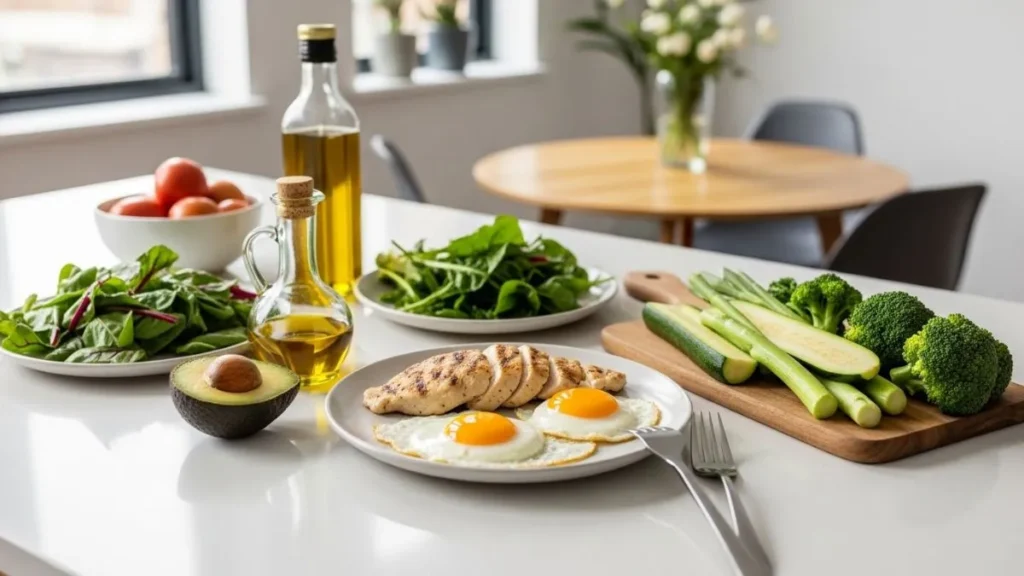
Keto 2.0 is designed for people who want the benefits of low-carb eating without extreme rules or constant tracking. Its flexible, protein-first structure makes it especially appealing for beginners and anyone who struggled with traditional keto in the past.
This approach may be a good fit if you:
• are new to keto and want a simpler way to start
• have tried classic keto but found it too rigid
• prefer whole foods over processed “keto” products
• want a lifestyle you can maintain long-term
• have a busy schedule and need quick, practical meals
• are focused on steady energy and balanced eating habits
Keto 2.0 is also popular among people who want to manage weight, improve metabolic health, or reduce sugar and refined carbohydrates — while still enjoying satisfying, real-world meals.
Because the emphasis is on sustainable habits rather than strict perfection, Keto 2.0 works well for:
✔️ working professionals
✔️ parents and families cooking simple meals
✔️ home cooks who like flexible templates
✔️ anyone easing into low-carb eating
✔️ people transitioning from a standard diet
If your goal is to feel better, eat smarter, and stay consistent without turning every meal into a math problem, Keto 2.0 may be a strong match.
Because the emphasis is on sustainable habits rather than strict perfection, Keto 2.0 works well for:
✔️ working professionals
✔️ parents and families cooking simple meals
✔️ home cooks who like flexible templates
✔️ anyone easing into low-carb eating
✔️ people transitioning from a standard diet
If your goal is to feel better, eat smarter, and stay consistent without turning every meal into a math problem, Keto 2.0 may be a strong match.
What Can You Eat on Keto 2.0?
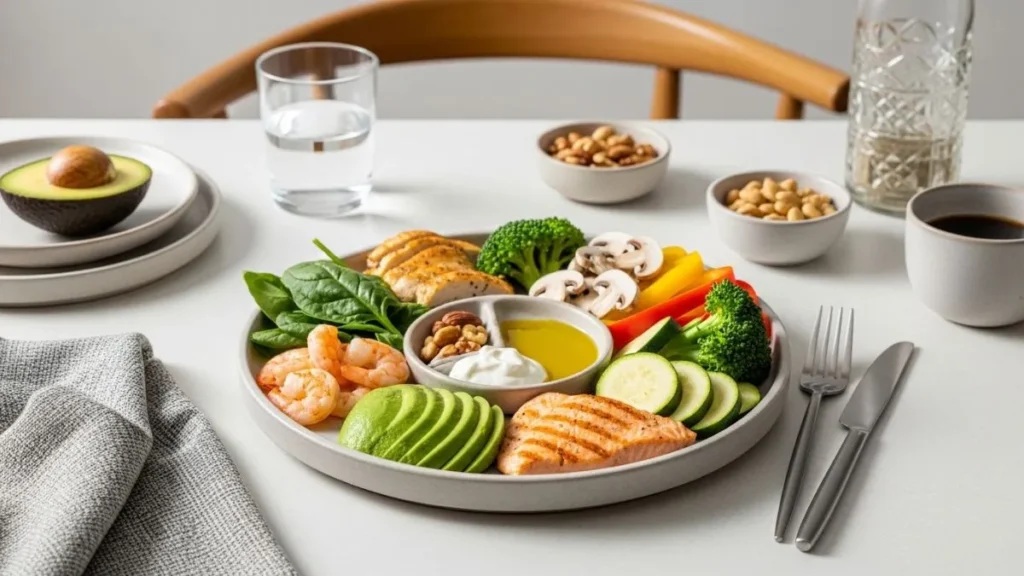
Keto 2.0 focuses on real, nutrient-dense foods that keep carbohydrates low while supporting energy, satiety, and long-term adherence. For more information on how low-carb foods can impact health, see Harvard Health’s guide on low-carb diets.
Instead of relying heavily on processed keto snacks or excessive fats, this approach encourages building meals around protein, vegetables, and intentional healthy fats.
Here’s what typically appears on a Keto 2.0 plate.
Proteins
Protein is the cornerstone of Keto 2.0.
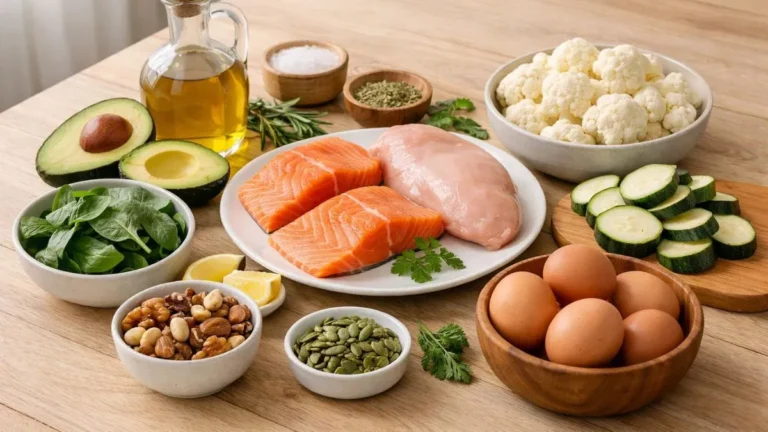
Choose high-quality sources such as:
• chicken, turkey, beef, lamb
• salmon, tuna, sardines, shrimp
• eggs
• tofu or tempeh (if low-carb friendly)
• full-fat Greek yogurt or cottage cheese in moderation
Protein helps you feel full, maintain lean mass, and stabilize blood sugar — making it easier to stick with low-carb eating.
Healthy Fats
Fats are still important on Keto 2.0, but they are used intentionally rather than excessively.
Good options include:
• olive oil and avocado oil
• avocados
• nuts and seeds
• butter or ghee in small amounts
• olives
These fats enhance flavor and satisfaction without dominating the plate.
Low-Carb Vegetables
Non-starchy vegetables provide fiber, vitamins, and volume to meals.
Common choices include:
• spinach, kale, arugula
• broccoli, cauliflower, zucchini
• asparagus
• mushrooms
• bell peppers (in moderation)
• cucumbers
They balance protein and fats while keeping carb intake controlled.
Foods to Limit
Keto 2.0 doesn’t ban foods harshly — but it does recommend limiting:
• sugar and sweetened foods
• refined grains and bread
• pasta, rice, and pastries
• potatoes and starchy vegetables
• most fruit except small berry portions
• highly processed “keto” packaged snacks
Keeping these foods minimal helps maintain a low-carb pattern and supports metabolic goals.
Sample Keto 2.0 Day of Eating
To make Keto 2.0 easier to visualize, here’s what a simple, real-life day of meals might look like.
These examples focus on protein-first plates, low-carb vegetables, and moderate healthy fats — without complicated tracking or specialty products.
Breakfast
• scrambled eggs with spinach and mushrooms
• half an avocado
• olive oil drizzle or butter for cooking
• black coffee or unsweetened tea
This type of breakfast delivers protein and fiber while keeping carbohydrates naturally low.
Lunch
• grilled chicken salad with mixed greens
• cherry tomatoes and cucumber
• olive oil and lemon dressing
• a handful of nuts if needed
A work-friendly lunch like this fits perfectly into a Keto 2.0 routine — simple to prep and easy to pack.
Dinner
• baked salmon or steak
• roasted zucchini and broccoli
• cauliflower mash with olive oil
• herbs and spices for flavor
Dinner stays balanced by anchoring the plate with protein and surrounding it with vegetables rather than heavy sauces.
Optional Snacks (If Needed)
Keto 2.0 doesn’t require constant snacking, but if hunger hits:
• boiled eggs
• cheese slices
• olives
• celery with almond butter
• Greek yogurt in moderation
Common Myths About Keto 2.0
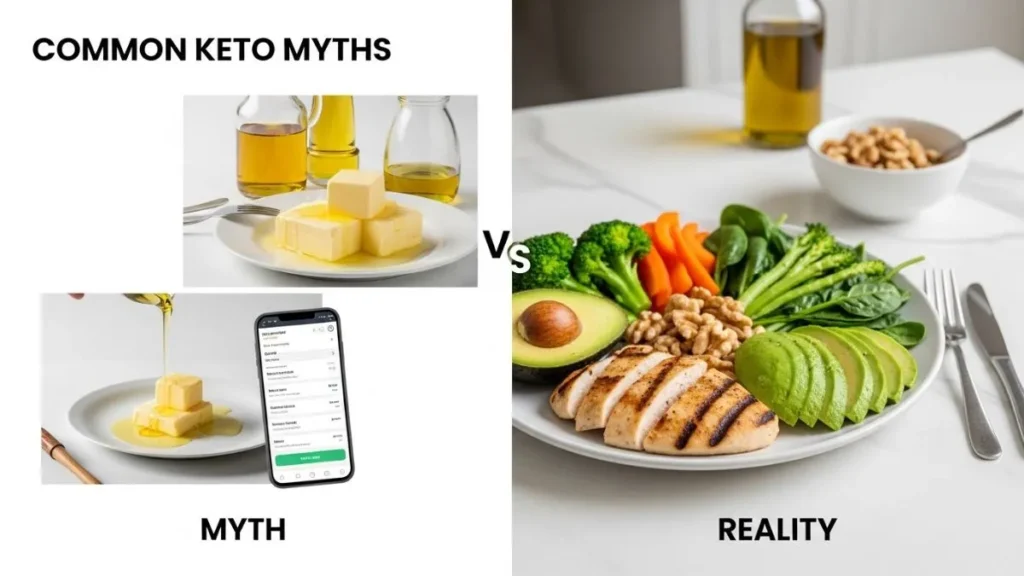
Because Keto 2.0 is newer than traditional keto, it’s often misunderstood. Many people assume it’s just another extreme diet — but the reality is far more balanced.
Let’s clear up some of the most common myths.
Myth 1 — “Keto 2.0 Is Just High-Fat Eating”
While fat is still part of the approach, Keto 2.0 does not encourage excessive fat loading.
Instead, meals are built around:
• adequate protein
• fiber-rich vegetables
• moderate healthy fats
Fat enhances satisfaction — it doesn’t dominate the plate.
Myth 2 — “You Must Track Every Gram”
Traditional keto often involves detailed macro tracking.
Keto 2.0 simplifies the process by focusing on food quality and plate balance rather than precise numbers.
Many people succeed without weighing food or logging every meal — especially once they understand low-carb basics.
Myth 3 — “You Can’t Eat Out on Keto 2.0”
Some believe keto makes restaurants impossible.
Keto 2.0 is designed for real life, including:
• grilled proteins with vegetables
• bunless burgers or lettuce wraps
• salads with olive oil dressing
• seafood dishes
With simple swaps, eating out becomes manageable.
Myth 4 — “Keto 2.0 Isn’t Sustainable”
This is one of the biggest misconceptions.
Because Keto 2.0 emphasizes flexible meal templates, whole foods, and realistic routines, many people find it easier to maintain long-term than stricter versions of keto.
How to Start Keto 2.0 Step by Step
Starting Keto 2.0 doesn’t require extreme restrictions or complicated tracking. The goal is to build simple habits that make low-carb eating sustainable from day one.
Follow these beginner-friendly steps.
Step 1 — Clean Up Your Pantry
Begin by removing or limiting high-carb staples such as:
• sugary snacks and drinks
• bread, pasta, and rice
• pastries and cereals
• candy and sweetened sauces
Stock your kitchen instead with:
• eggs, chicken, fish, and beef
• leafy greens and low-carb vegetables
• olive oil and avocado oil
• nuts and seeds
• herbs and spices
Step 2 — Build Protein-First Plates
At each meal, start with a solid protein source:
✔️ eggs or omelets
✔️ chicken, turkey, or steak
✔️ salmon or tuna
✔️ tofu or tempeh
Then add vegetables and healthy fats for balance.
This keeps meals satisfying and prevents carb cravings.
Step 3 — Keep Meals Simple
Avoid overcomplicating things in the beginning.
Stick to repeatable templates like:
• protein + salad + olive oil
• meat or fish + roasted vegetables
• eggs + sautéed greens
Simple meals reduce decision fatigue and make consistency easier.
Step 4 — Stay Hydrated and Mind Electrolytes
Low-carb diets can increase water loss early on.
Make sure to:
• drink enough water
• salt your food lightly
• include potassium-rich foods like spinach or avocado
• consider broth if needed
This helps prevent fatigue and headaches during adaptation.
Step 5 — Plan Ahead
Planning removes stress.
Try:
• prepping proteins for the week
• chopping vegetables in advance
• packing lunches
• keeping quick snacks on hand
Meal plans are especially useful for beginners who want structure.
Keto 2.0 vs Low-Carb vs Traditional Keto
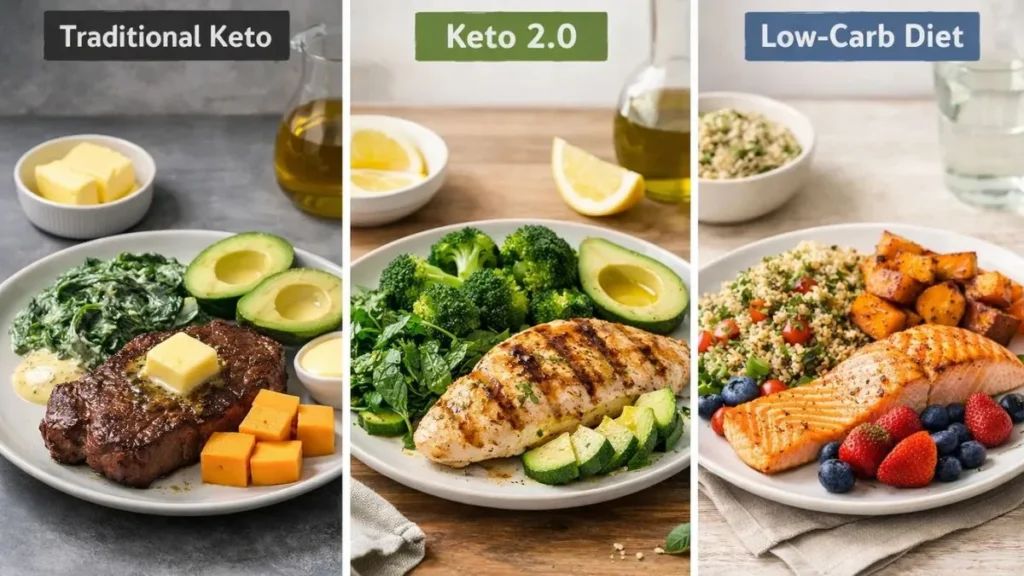
Although all three approaches reduce carbohydrate intake, they differ in structure, strictness, and long-term philosophy.
Here’s a simple side-by-side breakdown.
Traditional Keto
Focus: Very high fat, very low carbs
Protein: Moderate
Carb limit: Extremely low
Tracking: Often strict
Goal: Stay in deep ketosis
Typical characteristics:
• heavy use of oils, butter, and cream
• precise macro ratios
• ketone testing for some people
• rigid food rules
Keto 2.0
Focus: Protein-first, whole foods, sustainability
Protein: Higher
Carb limit: Low but flexible
Tracking: Minimal or optional
Goal: Metabolic health + consistency
Typical characteristics:
• balanced low-carb plates
• vegetables at every meal
• healthy fats used intentionally
• simple meal templates
• easier social eating
Low-Carb Diet
Focus: Reduce carbs without ketosis focus
Protein: Moderate to high
Carb limit: Varies widely
Tracking: Rare
Goal: Blood sugar control or weight management
Typical characteristics:
• includes more fruits and root vegetables
• may allow whole grains
• less emphasis on ketosis
• flexible long term
Although all three approaches reduce carbohydrate intake, they differ in structure, strictness, and long-term philosophy.
Here’s a simple side-by-side breakdown.
Traditional Keto
Focus: Very high fat, very low carbs
Protein: Moderate
Carb limit: Extremely low
Tracking: Often strict
Goal: Stay in deep ketosis
Typical characteristics:
• heavy use of oils, butter, and cream
• precise macro ratios
• ketone testing for some people
• rigid food rules
Keto 2.0
Focus: Protein-first, whole foods, sustainability
Protein: Higher
Carb limit: Low but flexible
Tracking: Minimal or optional
Goal: Metabolic health + consistency
Typical characteristics:
• balanced low-carb plates
• vegetables at every meal
• healthy fats used intentionally
• simple meal templates
• easier social eating
Low-Carb Diet
Focus: Reduce carbs without ketosis focus
Protein: Moderate to high
Carb limit: Varies widely
Tracking: Rare
Goal: Blood sugar control or weight management
Typical characteristics:
• includes more fruits and root vegetables
• may allow whole grains
• less emphasis on ketosis
• flexible long term
Quick Comparison Table
| Feature | Traditional Keto | Keto 2.0 | Low-Carb |
|---|---|---|---|
| Fat emphasis | Very high | Moderate | Moderate |
| Protein | Moderate | Higher | Moderate–High |
| Carb restriction | Very strict | Low but flexible | Moderate |
| Tracking needed | Often | Minimal | Rare |
| Long-term friendly | Difficult for many | Designed for sustainability | Usually |
| Beginner-friendly | Medium | High | High |
Is Keto 2.0 Safe for Beginners?
For most healthy adults, Keto 2.0 can be a safe and approachable way to reduce carbohydrates and improve eating habits — especially because it emphasizes whole foods, adequate protein, and balanced meals rather than extreme fat intake.
That said, everyone’s body is different.
Keto 2.0 is not a medical treatment, and beginners should always listen to their bodies and consider speaking with a healthcare professional before making major dietary changes — particularly if they:
• have diabetes or blood sugar disorders
• take medication for blood pressure
• have kidney disease
• are pregnant or breastfeeding
• have a history of eating disorders
Why Keto 2.0 Feels Easier Than Traditional Keto
Many people find Keto 2.0 gentler than classic keto because:
• meals are more balanced
• protein supports fullness and energy
• vegetables provide fiber and micronutrients
• hydration and electrolytes are emphasized
• rigid macro tracking is optional
These factors often reduce common low-carb adjustment symptoms like fatigue, headaches, or irritability.
How to Start Safely
To ease into Keto 2.0:
✔️ reduce carbs gradually instead of overnight
✔️ eat enough protein
✔️ include vegetables at every meal
✔️ drink water and salt food lightly
✔️ avoid undereating
✔️ prioritize sleep
Starting slowly and focusing on nutrient-dense foods helps most beginners transition comfortably.
Final Thoughts: Is Keto 2.0 Right for You?
Keto 2.0 isn’t about chasing extremes — it’s about building a low-carb lifestyle that feels realistic, nourishing, and sustainable.
By focusing on protein-first meals, whole foods, flexible structure, and long-term habits, this approach removes much of the friction that causes people to quit traditional keto.
If you’re new to low-carb eating, struggled with strict keto in the past, or simply want a smarter, more balanced way to reduce carbs, Keto 2.0 may be a strong fit.
The key is consistency — not perfection.
Start with simple meals, learn which foods work best for you, and use structured plans when you need guidance.
👉 From here, you can explore:
• beginner keto meal plans
• easy lunch guides
• grocery lists
• Keto 2.0 basics articles
These resources can help you take the next step with confidence.
FAQ — Keto 2.0 Explained
Is Keto 2.0 different from traditional keto?
Yes. Keto 2.0 still keeps carbohydrates low, but it places greater emphasis on protein intake, whole foods, and long-term sustainability instead of extreme fat consumption or rigid macro tracking.
Can beginners follow Keto 2.0?
Absolutely. Keto 2.0 is designed to be beginner-friendly, with simple meal templates, flexible rules, and a focus on real foods rather than complicated calculations.
Do you have to track macros on Keto 2.0?
Not necessarily. Many people succeed on Keto 2.0 by focusing on protein-first meals, low-carb vegetables, and moderate healthy fats instead of logging every gram.
How much protein should you eat on Keto 2.0?
Protein needs vary by individual, but Keto 2.0 generally encourages moderate to higher protein intake to support fullness, muscle health, and steady energy levels.
How long does it take to see results with Keto 2.0?
Some people notice changes in energy or appetite within the first week, while body composition changes may take several weeks depending on consistency, lifestyle, and individual factors.
Final Thoughts on Keto 2.0
Keto 2.0 represents a smarter, more sustainable evolution of the ketogenic diet. By prioritizing high-quality protein, whole foods, and practical meal planning over rigid macro tracking, it removes many of the barriers that make traditional keto difficult to maintain.
Whether you’re new to low-carb living or looking for a more balanced approach, Keto 2.0 offers a beginner-friendly framework that supports long-term consistency — not short-term extremes.
If you’re ready to simplify your journey and start the right way, download your free 2.0 Starter Guide here and take the first confident step toward a smarter keto lifestyle.