Keto 2.0 vs Traditional Keto: What’s the Real Difference?
The debate around Keto 2.0 vs Traditional Keto is becoming more common as the ketogenic diet continues to evolve. While traditional keto has helped many people lose weight, boost energy, and improve metabolic health, it can also feel restrictive, rigid, and difficult to maintain long term.
That’s where Keto 2.0 enters the conversation.
This modern, more balanced approach to low-carb eating promises greater flexibility, higher protein intake, and a more sustainable way to stay consistent — especially for beginners and busy individuals who want real-world results without obsessing over strict macro ratios.
But what exactly is the difference between Keto 2.0 and traditional keto? Are the macros really that different? And more importantly, which approach is better for your goals?
In this guide, we’ll break down Keto 2.0 vs Traditional Keto step by step, compare their core principles, examine their pros and cons, and help you decide which version of keto fits your lifestyle best.
Table of Contents
What Is Traditional Keto?
Traditional keto, also known as the classic ketogenic diet, is a very low-carbohydrate, high-fat eating approach designed to shift the body into a metabolic state called ketosis.
In ketosis, the body burns fat for fuel instead of carbohydrates. To achieve this state, traditional keto typically requires a strict macronutrient ratio:
- 70–75% of calories from fat
- 20–25% from protein
- 5–10% from carbohydrates
Carb intake is usually limited to 20–30 grams of net carbs per day, which means eliminating most grains, fruits, legumes, and starchy vegetables.
How Traditional Keto Works
By drastically reducing carbohydrate intake, insulin levels drop, and the body begins converting fat into ketones — an alternative fuel source. This metabolic shift is what makes traditional keto popular for weight loss and metabolic health improvements.
Many people experience:
- Rapid initial weight loss
- Reduced appetite
- Stable blood sugar levels
- Increased fat burning
Limitations of Traditional Keto
However, despite its effectiveness, traditional keto can feel restrictive for some people.
Strict macro tracking, heavy reliance on dietary fats, limited food variety, and social eating challenges often make long-term adherence difficult — especially for beginners.
For those who struggle with rigidity or sustainability, this is where the discussion of Keto 2.0 vs Traditional Keto becomes particularly relevant.
What Is Keto 2.0?
Keto 2.0 is a modern evolution of the traditional ketogenic diet that prioritizes balance, sustainability, and higher-quality nutrition over extreme macro precision.
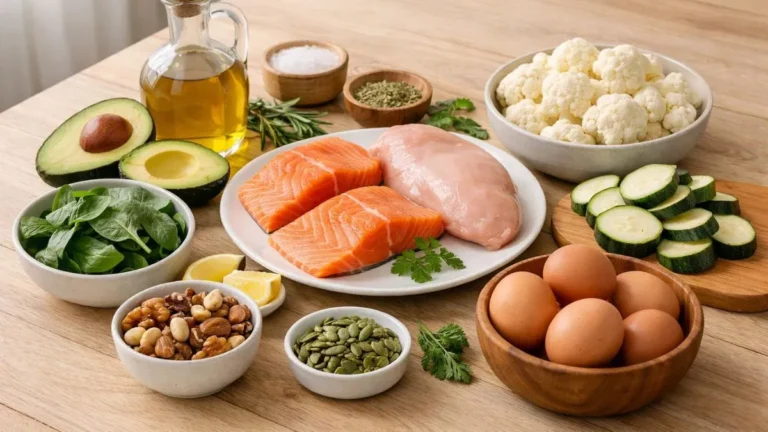
Instead of emphasizing very high fat intake, Keto 2.0 shifts the focus toward lean protein, whole foods, low-carb vegetables, and a more moderate fat approach. While carbohydrates are still kept relatively low, the structure is less rigid and easier to maintain long term.
How Keto 2.0 Is Different
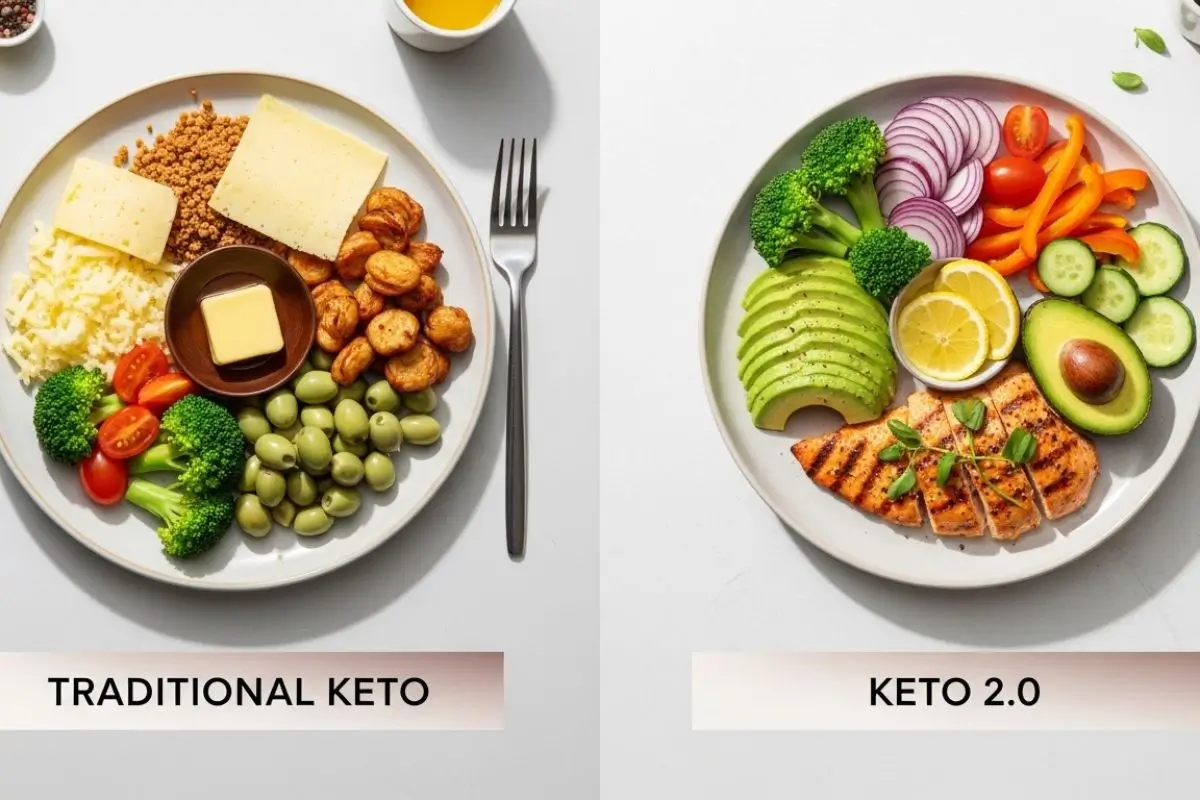
In contrast to traditional keto’s heavy fat emphasis, Keto 2.0 typically follows a more balanced macronutrient distribution:
- 50–60% of calories from fat
- 30–35% from protein
- 10–20% from carbohydrates
This slight increase in protein and flexibility in carb intake makes the approach more accessible, particularly for beginners and active individuals.
The Philosophy Behind Keto 2.0
Keto 2.0 is built around sustainability rather than strict ketosis at all costs. The goal is not extreme carb restriction but metabolic balance — reducing processed carbohydrates while encouraging nutrient-dense, real foods.
It often includes:
- More non-starchy vegetables
- Lean protein sources
- Healthy fats in moderation
- Practical meal planning
- Less obsessive macro tracking
For many people comparing Keto 2.0 vs Traditional Keto, the biggest difference isn’t just the macros — it’s the lifestyle flexibility.
Keto 2.0 vs Traditional Keto: Side-by-Side Comparison
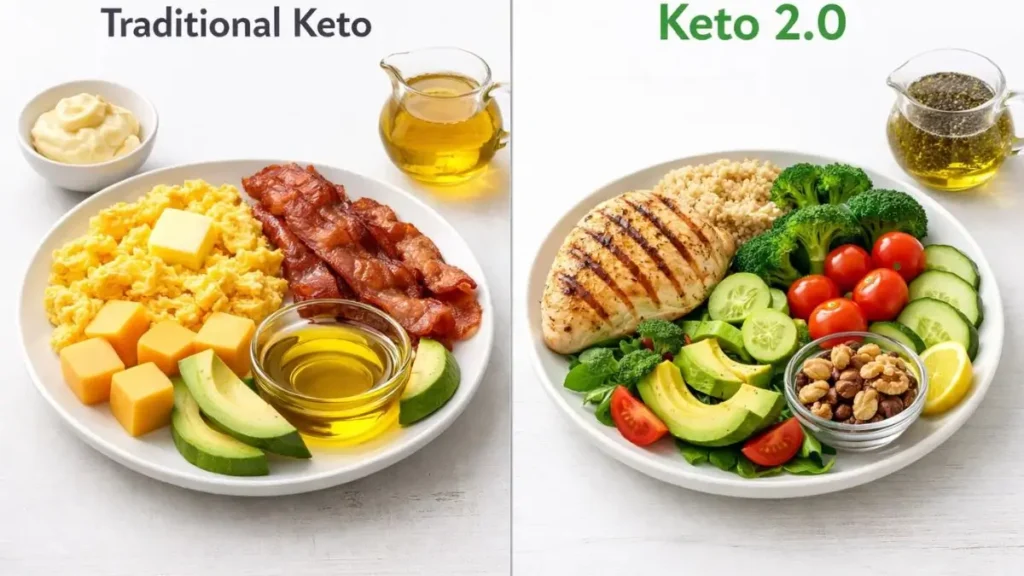
When comparing Keto 2.0 vs Traditional Keto, the core differences come down to macronutrient balance, flexibility, sustainability, and overall lifestyle compatibility.
While both approaches reduce carbohydrate intake and aim to improve metabolic health, they differ significantly in structure and long-term practicality.
Below is a clear side-by-side breakdown:
Comparison Table
| Feature | Traditional Keto | Keto 2.0 |
|---|---|---|
| Primary Focus | High fat, very low carb | Balanced macros, higher protein |
| Fat Intake | 70–75% of calories | 50–60% of calories |
| Protein Intake | Moderate (20–25%) | Higher (30–35%) |
| Carbohydrates | 5–10% (20–30g/day) | 10–20% (slightly more flexible) |
| Ketosis Goal | Deep, strict ketosis | Metabolic balance, flexibility |
| Food Variety | Limited | More vegetables and lean protein |
| Ease of Social Eating | Often difficult | More adaptable |
| Long-Term Sustainability | Can be challenging | Designed for long-term consistency |
| Best For | Rapid fat adaptation, strict keto followers | Beginners, busy professionals, lifestyle balance |
Key Differences Explained
The biggest distinction in the Keto 2.0 vs Traditional Keto debate is the shift away from extreme fat reliance.
Traditional keto prioritizes ketosis above all else, often requiring strict macro tracking and heavy fat consumption. Keto 2.0, on the other hand, focuses on nutrient quality and higher protein intake while still maintaining a low-carb foundation.
This makes Keto 2.0:
- Easier to follow
- Less restrictive
- More socially adaptable
- More sustainable over time
For many people, the choice isn’t about which diet produces ketosis faster — it’s about which one they can realistically maintain for months or years.
Which One Is Better for Beginners?

For beginners, the choice between Keto 2.0 vs Traditional Keto often comes down to simplicity and sustainability.
Traditional keto can be effective, but its strict macro ratios, very low carb limits, and heavy reliance on dietary fat can feel overwhelming for someone just starting out. Tracking every gram of fat and carbohydrate requires discipline, knowledge, and consistency — which many beginners struggle with in the early stages.
Keto 2.0, by contrast, offers a more balanced and approachable framework. With slightly higher protein intake, more flexibility in food choices, and less obsession over perfect macro ratios, it reduces the learning curve while still supporting low-carb goals.
For those new to low-carb eating, this flexibility can make a significant difference in long-term adherence.
If you’re just getting started and want structured, step-by-step support, you may benefit from exploring a more detailed keto for beginners guide to build a strong foundation.
Ultimately, the best approach for beginners is not necessarily the strictest one — it’s the one they can follow consistently.
Is Keto 2.0 Better for Long-Term Results?

When evaluating Keto 2.0 vs Traditional Keto, one of the most important questions is sustainability.
Short-term results often look impressive with traditional keto. Rapid water loss, quick fat adaptation, and strict carb control can lead to noticeable early changes. However, maintaining extreme macro ratios over months — or years — is where many people struggle.
Strict tracking, limited food variety, and social restrictions frequently lead to burnout.
Keto 2.0 was designed to address that exact issue.
By allowing slightly more carbohydrates, increasing protein intake, and emphasizing whole, nutrient-dense foods, Keto 2.0 supports metabolic health without requiring constant macro obsession. This balanced structure makes it easier to follow consistently — which is ultimately what drives long-term results.
Research and real-world experience both suggest that adherence is the most important factor in sustainable weight loss and lifestyle change. A diet that feels realistic is more powerful than one that feels extreme.Some health experts also emphasize that long-term adherence matters more than extreme dietary rules. According to Harvard Health Publishing, highly restrictive diets can be difficult to sustain over time, which may impact long-term success.
For those looking for structured guidance, following a practical program like a Keto 2.0 meal plan can significantly improve consistency and reduce decision fatigue.
Over time, consistency compounds. And that’s where Keto 2.0 often has the advantage.
Pros and Cons of Each Approach
When comparing Keto 2.0 vs Traditional Keto, both approaches have advantages and potential drawbacks. The right choice depends on your goals, lifestyle, and level of experience.
Traditional Keto – Pros
- Rapid fat adaptation and ketosis
- Clear macro structure
- Effective for short-term weight loss
- Strong appetite suppression for some individuals
- Popular and widely studied
Traditional Keto – Cons
- Very restrictive carbohydrate limit
- Heavy reliance on dietary fat
- Requires strict macro tracking
- Can be socially limiting
- Difficult for beginners to maintain long term
Keto 2.0 – Pros
- Higher protein intake for better satiety
- More flexibility with carbohydrates
- Greater food variety (especially vegetables)
- Easier to maintain socially
- Designed for long-term sustainability
- Beginner-friendly structure
Keto 2.0 – Cons
- May not produce deep ketosis as quickly
- Requires mindful food quality choices
- Less rigid structure may confuse those who prefer strict rules
A Balanced Perspective
The debate around Keto 2.0 vs Traditional Keto is not about which diet is “perfect.” It’s about which approach aligns better with your personal goals and lifestyle.
For individuals seeking strict ketosis and fast metabolic adaptation, traditional keto may be appealing. For those prioritizing sustainability, flexibility, and long-term consistency, Keto 2.0 often provides a more realistic path.
Ultimately, consistency matters more than perfection.
Who Should Choose Keto 2.0?
Keto 2.0 is not meant to replace traditional keto for everyone — but it is especially well-suited for people who value flexibility, balance, and long-term consistency.
This approach may be a better fit if you:
- Are new to low-carb or ketogenic eating
- Found traditional keto too restrictive or difficult to maintain
- Prefer higher protein intake and more food variety
- Want a realistic approach that fits social and work life
- Are focused on sustainable weight loss rather than quick fixes
- Want clear structure without obsessive macro tracking
Keto 2.0 is also ideal for busy professionals and individuals who want results without turning nutrition into a full-time job. By emphasizing practical meal planning and whole foods, it supports consistency — the most important factor in long-term success.
On the other hand, individuals pursuing therapeutic ketosis or those who thrive on strict structure may still prefer a more traditional ketogenic approach.
For most people seeking a modern, beginner-friendly way to reduce carbs and improve metabolic health, Keto 2.0 offers a balanced and realistic solution.
FAQ — Keto 2.0 vs Traditional Keto
Is Keto 2.0 still a ketogenic diet?
Yes, Keto 2.0 is still a low-carb, ketogenic-style approach. However, it focuses less on extreme fat intake and more on balanced macros, higher protein, and whole foods. While ketosis may still occur, the primary goal is sustainability rather than maintaining deep ketosis at all times.
Does Keto 2.0 keep you in ketosis?
Keto 2.0 can support ketosis, especially in the early stages, but it does not prioritize constant deep ketosis. Slightly higher protein and carb intake may reduce ketone levels for some people, yet many still experience metabolic benefits without strict ketosis tracking.
What are the main macro differences between Keto 2.0 and traditional keto?
Traditional keto typically emphasizes very high fat intake (70–75%) with moderate protein and very low carbs. Keto 2.0 shifts this balance by increasing protein, moderating fat, and allowing slightly more carbohydrates to improve flexibility and long-term adherence.
Is Keto 2.0 better for weight loss?
Keto 2.0 can be effective for weight loss, particularly because it is easier to maintain over time. While traditional keto may produce faster short-term results, Keto 2.0 supports consistency, appetite control, and sustainable habits — all critical factors for long-term weight management.
Can beginners start with Keto 2.0 instead of traditional keto?
Yes, Keto 2.0 is often more beginner-friendly. Its flexible structure, higher protein intake, and reduced emphasis on strict macro tracking make it easier for newcomers to adopt and maintain compared to traditional keto.
Final Thoughts on Keto 2.0 vs Traditional Keto
When comparing Keto 2.0 vs Traditional Keto, the real difference lies in structure, flexibility, and long-term sustainability.
Traditional keto remains a powerful metabolic tool, particularly for those who thrive under strict macro control and deep ketosis. However, for many people, its rigidity can make long-term adherence challenging.
Keto 2.0 offers a more balanced alternative — one that emphasizes higher-quality protein, whole foods, and realistic meal planning without eliminating the core principles of low-carb nutrition.
In the end, the best approach isn’t the strictest one — it’s the one you can follow consistently.
If you’re ready to take the smarter, more sustainable approach to low-carb living, download your free Keto 2.0 Starter Guide here and start building a keto lifestyle designed for real life.